Daniel Riedener
Head Cyber Security at Ceruno AG, an agile Swiss solution provider for cyber security, connectivity and platform. Brings the practitioner’s perspective into the podcast — what is already visible in the SOC.
View profileA podcast series by OST – University of Applied Sciences of Eastern Switzerland. Across ten episodes we measure how artificial intelligence is changing cybersecurity on both sides — from frontier models that find vulnerabilities to deepfakes that break trust. With Daniel Riedener (Ceruno), Christoph Landolt (CISPA Helmholtz Center) and Christoph Würsch (OST).
Anyone producing a podcast about artificial intelligence eventually faces an awkward question: should you actually use the very technology you keep talking about?
We thought about it for a long time — roughly three seconds — and then decided: of course. Refusing would be a bit like hosting a cooking show and never turning on the stove. So we did not just make AI the topic; we let it help out.
We use AI for cybersecurity — and we decided to do so here, too. This season was created with the help of AI and then turned into a lively podcast via speech synthesis (text-to-speech). The four voices you hear — Cynthia, Robert, Lukas and Chris — are therefore artificially generated.
The conversations themselves are entirely fictional. In terms of content, however, they are based on real facts, current studies and relevant developments in the fields of AI, cybersecurity and strategic defence. The sources used are transparently listed with every episode.
Our goal is to raise awareness, inform and entertain — and, of course, to draw attention to our CAS “AI-Driven Cybersecurity and Strategic Defence”, which starts in autumn 2026.
The whole thing is an experiment. We are curious about your feedback.
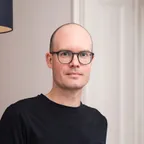
Behind the AI voices are three real people who researched, verified and curated the content:
Head Cyber Security at Ceruno AG, an agile Swiss solution provider for cyber security, connectivity and platform. Brings the practitioner’s perspective into the podcast — what is already visible in the SOC.
View profile
PhD student at the CISPA Helmholtz Center for Information Security in Saarbrücken, advised by Mario Fritz (primary advisor, CISPA) and Florian Tramèr (co-advisor, ETH Zurich – SPY Lab). As an ELLIS PhD student, his research focuses on agentic and self-optimizing systems for cybersecurity.
View profile
Head of Industrial AI (IAI) at the ICE – Institute for Computational Engineering at OST and programme lead of the CAS AI-Driven Cybersecurity and Strategic Defence. Translates between ML and security language — RLHF, agentic loops, adversarial robustness.
View profileBetween 2024 and 2026, artificial intelligence has shifted from a productivity tool to an independent operator — on both sides of cybersecurity. What was a script generator two years ago is today an agentic pipeline that finds vulnerabilities, personalizes phishing emails, and clones voices. At the same time, what a SOC analyst once had to triage manually now lands on a copilot in a fraction of the time.
Across ten 15-minute episodes, we ask the same question: who benefits more — attackers or defenders? We start with the threat landscape, examine the offensive and defensive sides separately, dig into deepfakes, prompt injection, supply-chain risks and geopolitics, and close with regulation and the skills gap.
The podcast accompanies the CAS AI-Driven Cybersecurity and Strategic Defence at OST. To go deeper, the CAS provides the structured form: fourteen on-campus days, fifteen ECTS, alongside your job.
Ten episodes, a new one every other Tuesday. Click an episode for show notes, a summary and sources.
The new threat landscape
Open episodeWhat frontier models actually deliver to attackers
Open episodePhishing at industrial scale
Open episodeVoice, face, trust
Open episodeHow AI rebuilds the SOC
Open episodeAutonomous agents and the human in the loop
Open episodePrompt injection, model theft, agentic risk
Open episodeFrom the XZ backdoor to slopsquatting
Open episodeWho benefits, where does Switzerland stand
Open episodeAnd what you can do
Open episode